← projects

RoboCupJunior Rescue Maze

2017–2018 · archived

Robot builder and competitor · two China championships · 2017 SuperTeam third place

Autonomous maze-rescue robots built with my high-school team won two China championships, qualified for consecutive international finals, and placed third with a Swedish team in the 2017 SuperTeam Challenge.

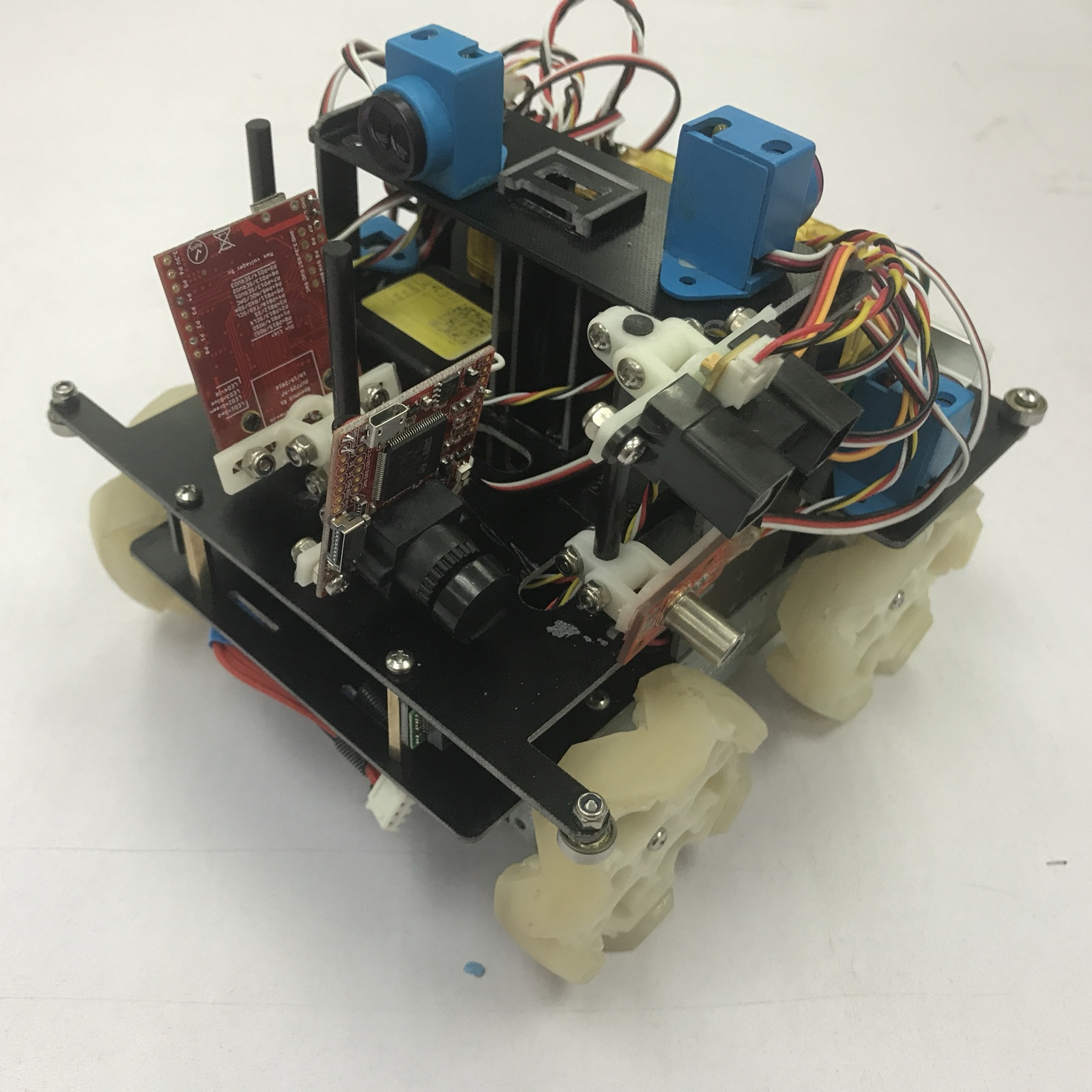
The compact competition robot viewed from above and to the side, showing its mecanum wheels, sensors, controllers, and wiring.
The 2017 Rescue Maze robot—small enough to carry in one hand, dense enough that every mechanical and electrical decision competed for the same space.

2017 · China to Japan

My high-school team won the RoboCupJunior Rescue Maze championship in China, qualifying for the international final in Japan. I travelled with the team and competed there with the robot shown on this page. We also partnered with a Swedish team for the official SuperTeam Challenge, adapting our robots to a newly revealed joint mission and placing third together.
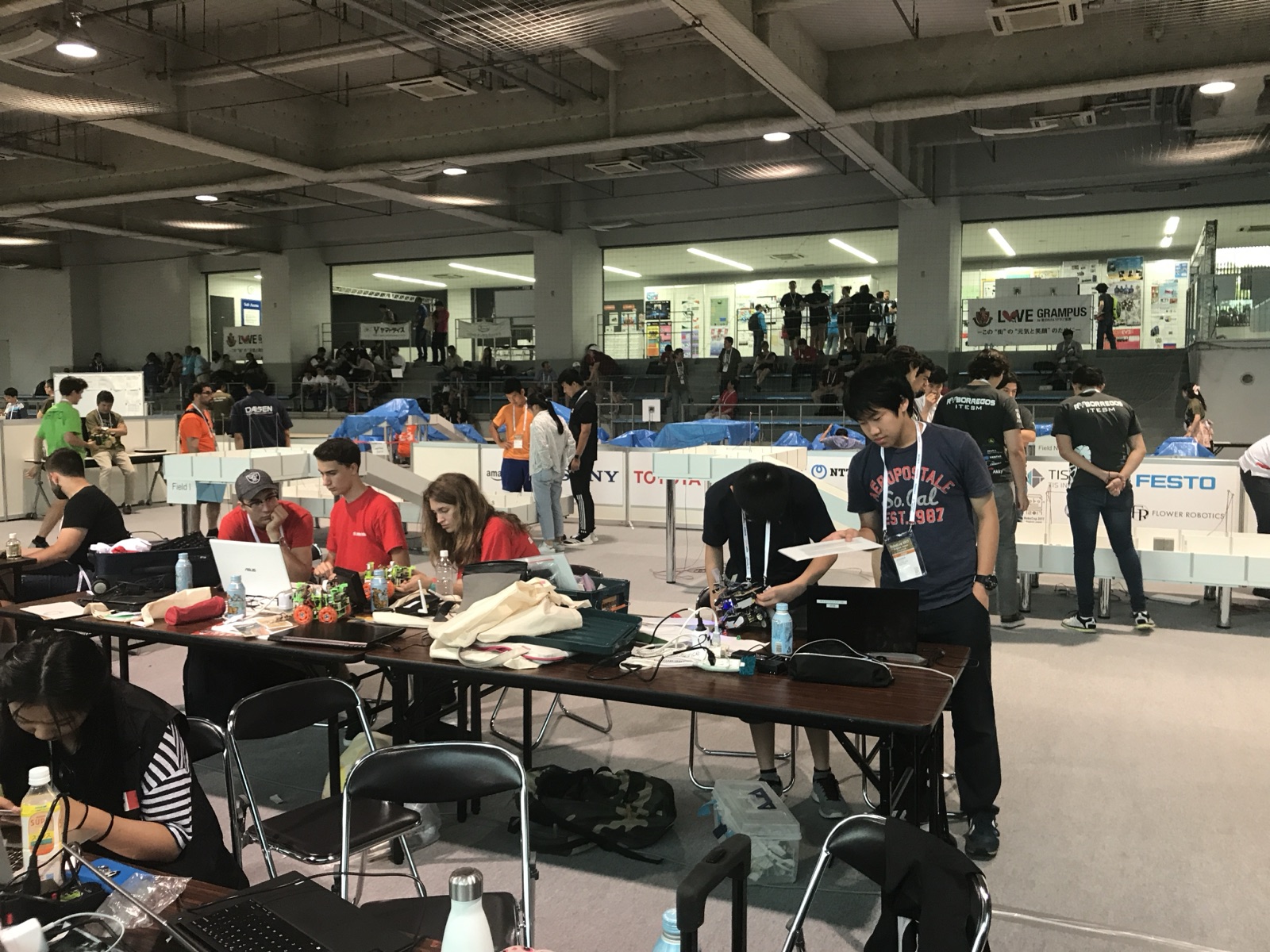
Teams preparing and testing their robots beside the competition fields at the 2017 international final in Japan.
Preparing beside the Rescue Maze fields in Japan, 2017.
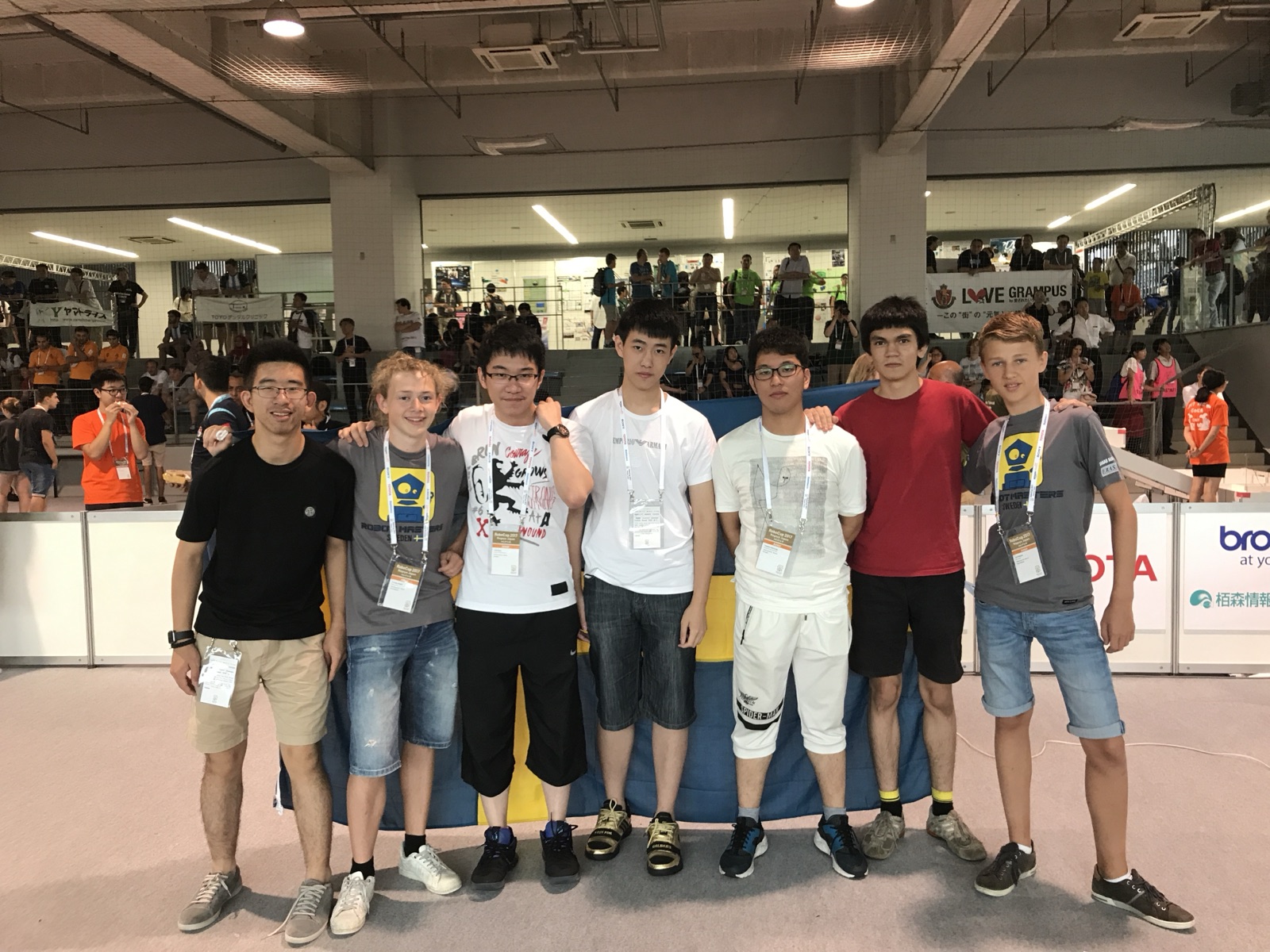
Our Rescue Maze team standing with the Swedish team we partnered with at the 2017 international final in Japan.
With our Swedish partners after placing third together in the SuperTeam Challenge.

2018 · China to Canada

We won the China championship again the following year and qualified for the international final in Canada. I built with the team through the China competition but did not travel to the final; my teammates represented us there.
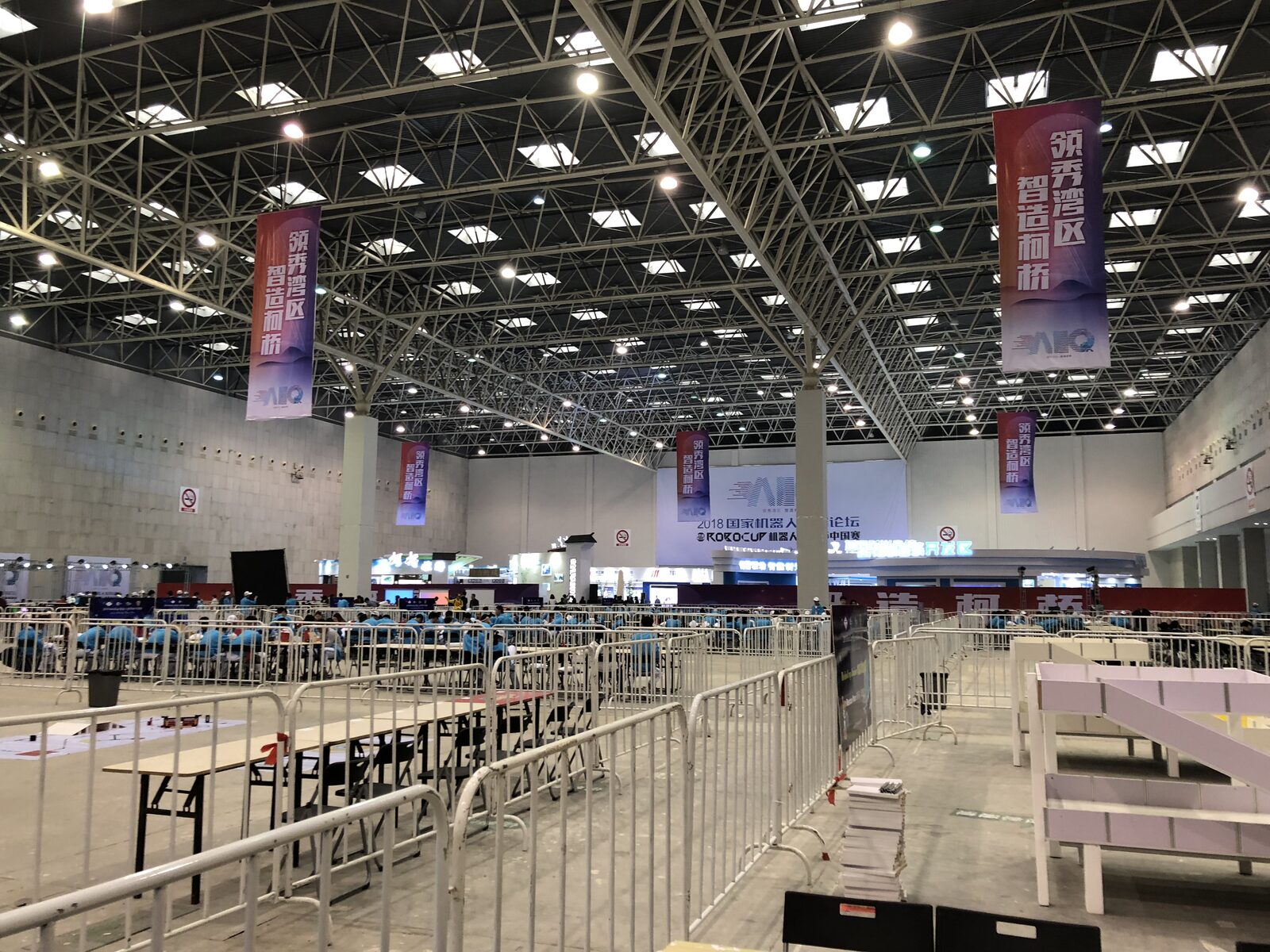
The Rescue Maze fields at the 2018 RoboCup China competition in Shaoxing.
The 2018 RoboCup China competition in Shaoxing.
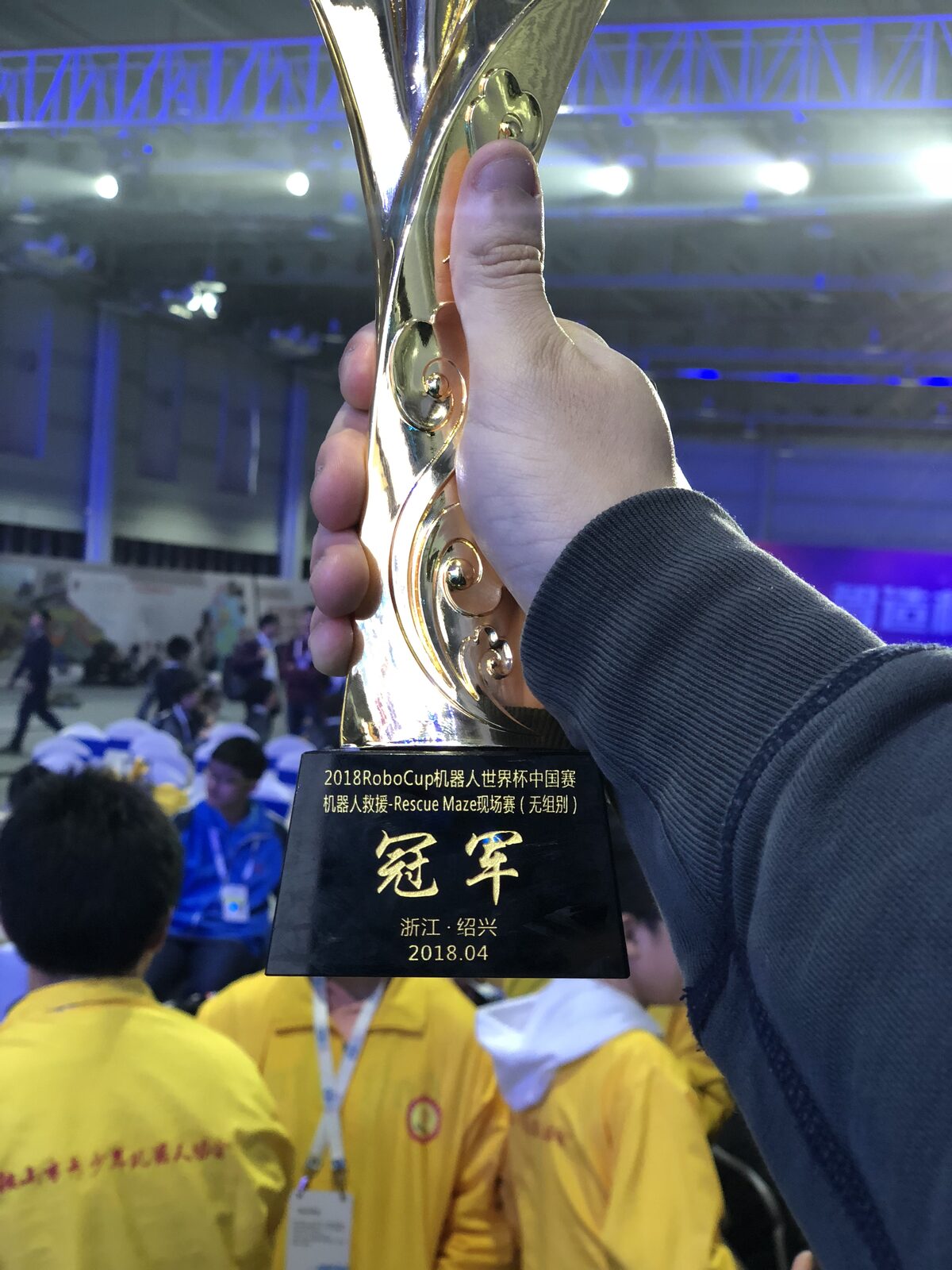
The 2018 RoboCup China Rescue Maze championship trophy held above the award ceremony.
Rescue Maze champion, 2018—the result that qualified the team for Canada.

The work

Rescue Maze robots navigate an unknown maze autonomously, detect victims, and keep working across uneven terrain. Ours combined a compact mechanical frame with custom-mounted sensors, control boards, cameras, and tightly packed wiring. A design only counted if it survived the field, could be diagnosed between rounds, and performed reliably with the rest of the team depending on it.
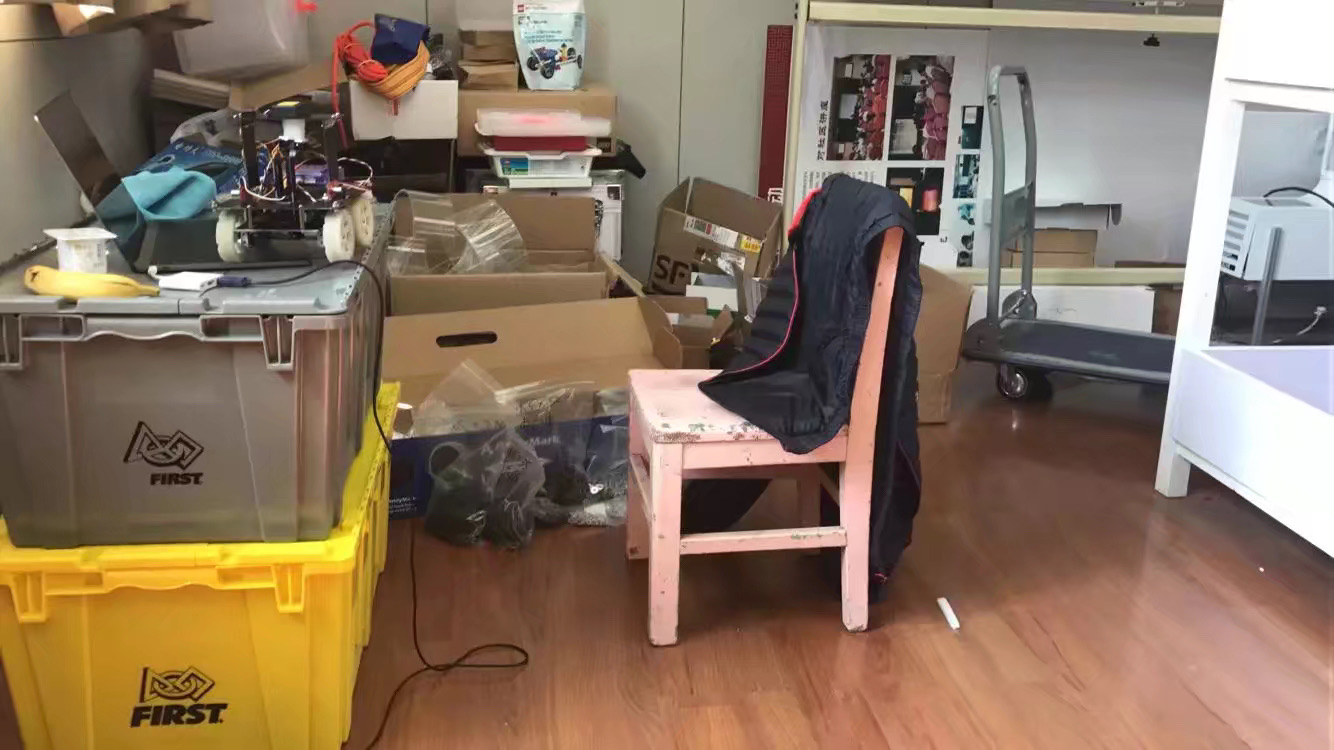
The Rescue Maze robot resting on equipment cases beside a pink stool in the academy workspace where it was developed.
The academy workspace where we built and tested the robot—the pink stool included.