← projects

LEGO mechanical writer

2016 · archived

Designer and builder · mechanical memory · actuation · modular design

A modular LEGO Technic writing machine that stored and executed motion mechanically, with no electronics or software.

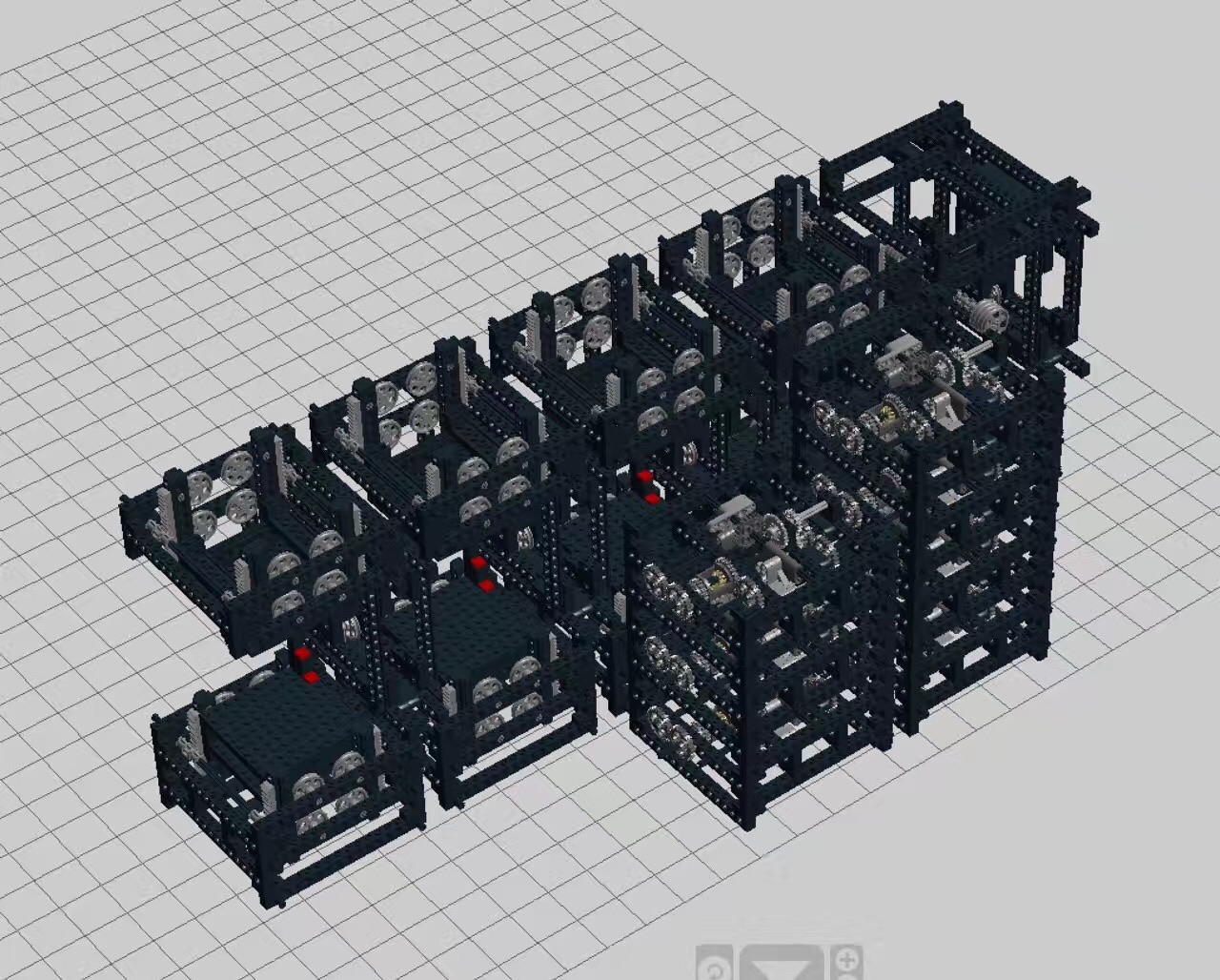
A digital model of the complete LEGO mechanical writing machine, showing its long frame and interconnected gear trains.
The complete mechanism, modeled as a chain of tightly coupled LEGO Technic assemblies.

The idea

I wanted to make a writing robot whose instructions and movement both lived in the mechanism itself. Rather than using software or electronic control, the machine stored motion mechanically, then translated that stored information into movement at the writing end.

A system of modules

I divided the machine into specialized modules for storing, transferring, and executing motion. Each module had one mechanical responsibility and connected to the others through shared interfaces. This made a long, tightly coupled mechanism easier to design, test, and change one function at a time.
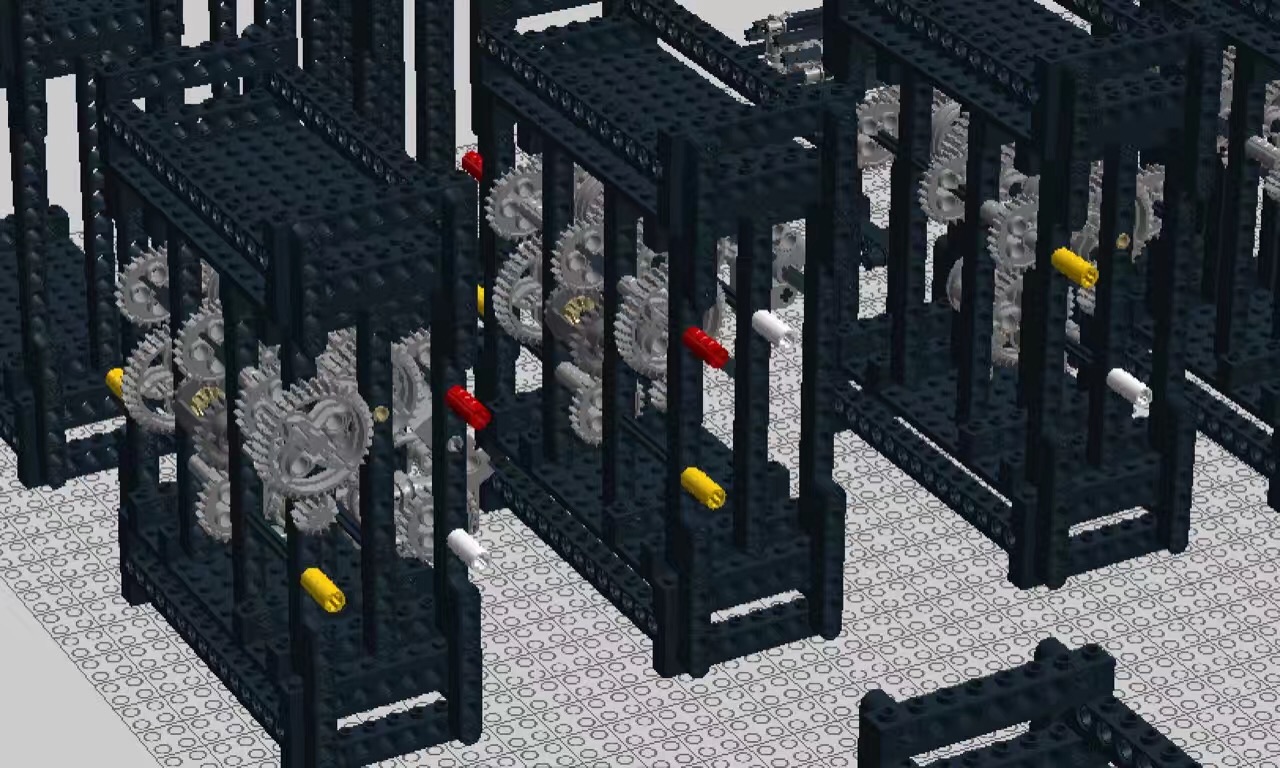
Close view of repeated LEGO gear trains inside the writing machine.
Repeated gear trains form one of the machine’s motion-transfer modules.
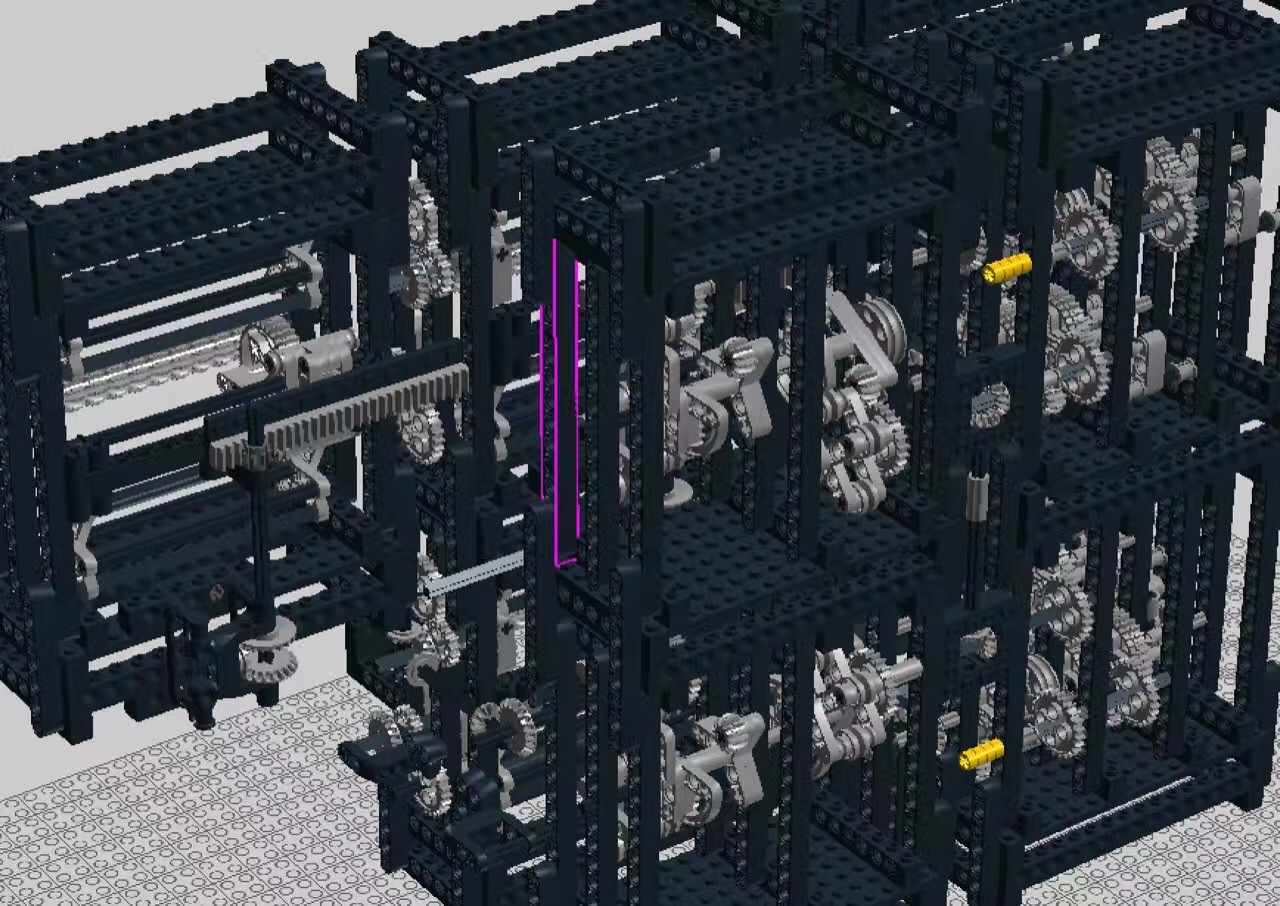
Close view of the LEGO writing machine's racks, gears, and linked transfer mechanisms.
Racks and linked assemblies translate stored motion into directed movement.

Mechanical logic

Gear ratios, alignment, backlash, and structural rigidity became part of the machine’s logic. The behavior was not hidden in a controller: it could be followed physically from the storage modules, through the drive train, to the mechanisms that produced the final movement.
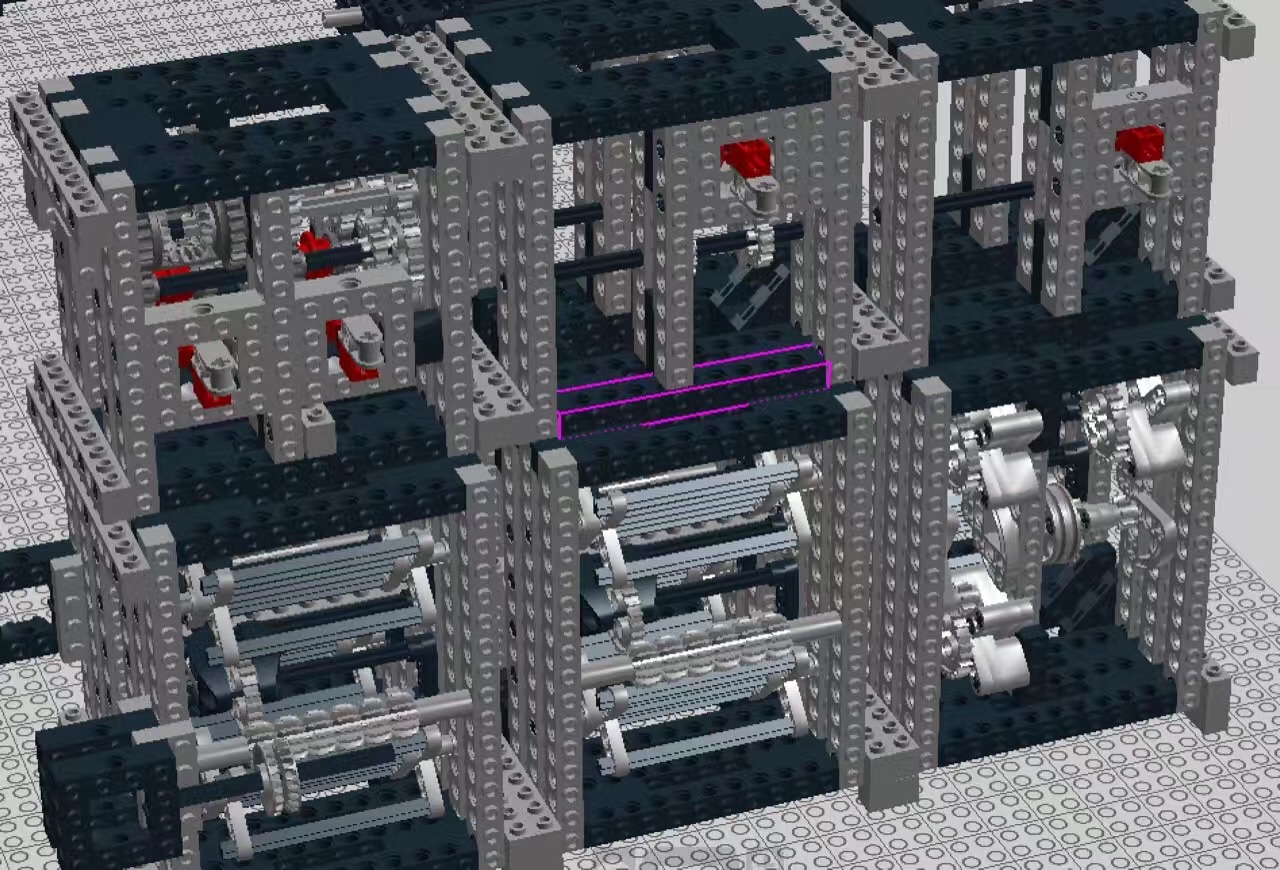
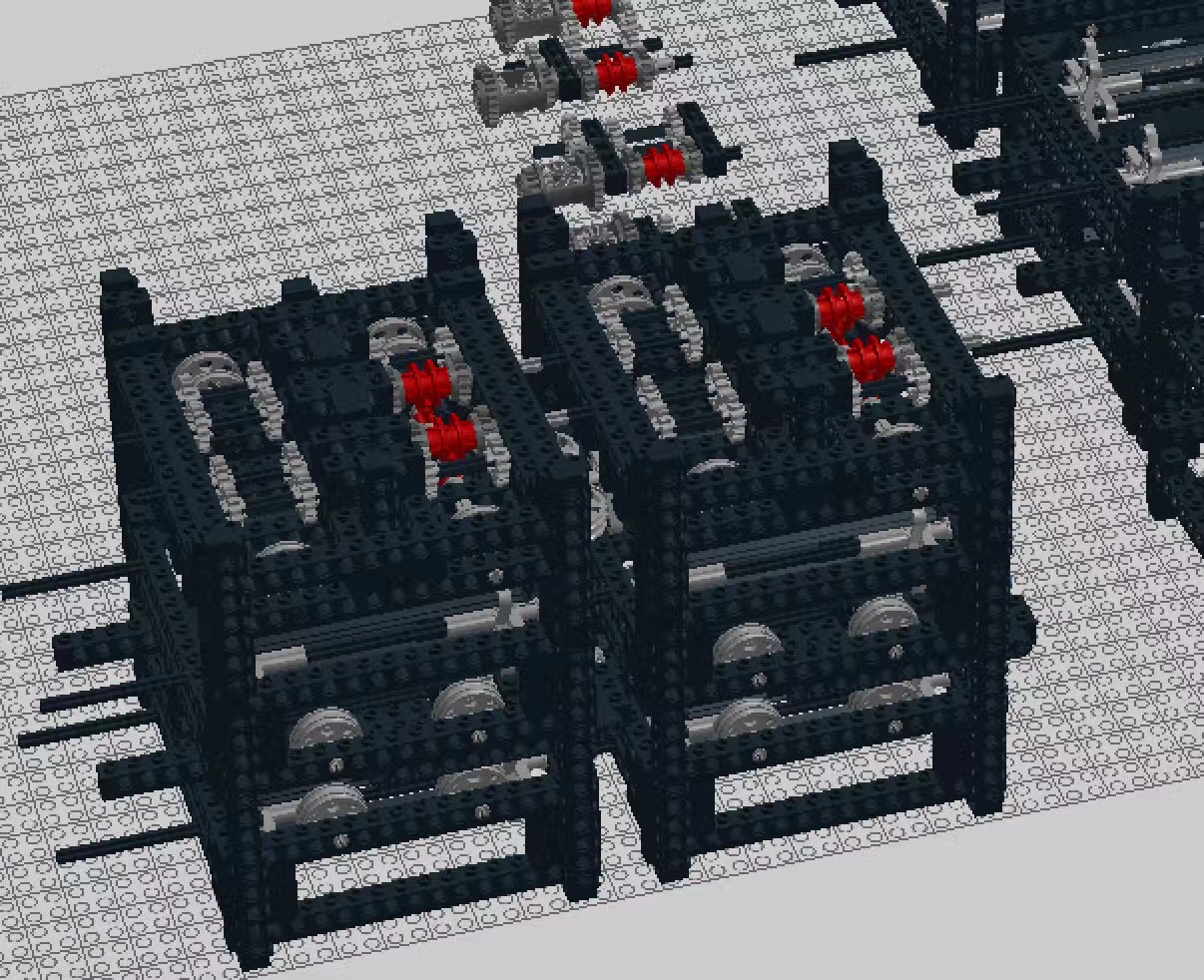
A close view of shafts, rollers, and gears in one module of the LEGO mechanical writer.
A self-contained drive and transfer module.
Two separate functional modules at the front of the LEGO mechanical writer.
Distinct modules connect into one mechanical system.